Transforming Cities, Financing Inclusion: Brazil’s Local Innovations on the Road to Seville
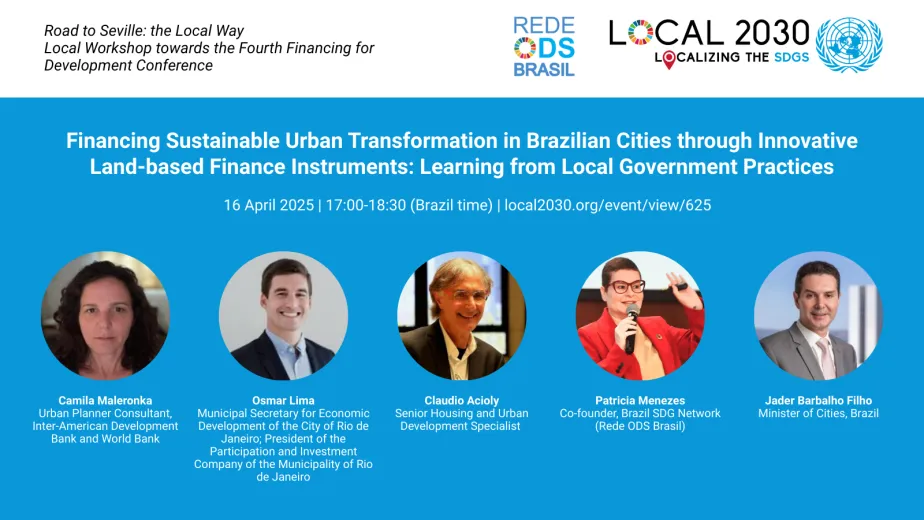


As part of the “Road to Seville: the Local Way” initiative, the recent Brazil-focused workshop—hosted by the Rede ODS Brasil—spotlighted transformative local finance tools rooted in the Statute of the City and decades of urban innovation.
Two standout case studies from Brazil showed how land-based financing is unlocking inclusive urban transformation:
São Paulo – Capturing Land Value through Outorga Onerosa and Urban Operations
Camila Maleronka, Urban Planner, São Paulo, presented São Paulo’s pioneering use of Outorga Onerosa do Direito de Construir and Certificates for Additional Building Potential (CEPACs)—instruments that generated R$6.8 billion since 2003, primarily invested in infrastructure and affordable housing.
Operação Urbana Água Espraiada, where funds from CEPAC sales helped finance new bridges, drainage, and social housing like Jardim Edith. São Paulo’s model demonstrates how zoning, finance, and equity can align to localize the SDGs.
Rio de Janeiro – Revitalizing the Port and Historic Core through CEPACs and Real Estate Funds
Osmar Lima, Planning Advisor, City of Rio de Janeiro, shared lessons from the Porto Maravilha Urban Operation, which used CEPACs and an innovative real estate investment fund to redevelop 1,300 hectares of the port zone.
Through CCPAR, Rio has enabled over 11,000 housing units in the port area and launched the Reviver Centro programme, which incentivizes residential development in the historic center via a transfer of building rights from high-income areas like Ipanema. These efforts reflect a bold strategy to densify, restore, and repopulate neglected areas while ensuring financial sustainability.
Key messages from speakers and partners:
- Patrícia Miranda Menezes (Rede ODS Brasil) highlighted Brazil’s leadership in SDG localization and the vital role of local governments.
- Claudio Acioly Jr (Moderator) emphasized that land value created by public investment must serve the public good.
- Camila Maleronka underscored the importance of legal clarity and institutional coordination to design tools that are not only effective but equitable.
- Osmar Lima stressed the need for institutional flexibility and strategic partnerships to bring long-term urban visions to life.
- Minister Jader Filho (Ministry of Cities) reaffirmed the federal government’s support for municipal innovation in line with the City Statute.
These case studies show that land-based financing is not just technically feasible—it’s a powerful driver of inclusive, place-based development. On the Road to Seville, local leadership continues to shape global financing debates with real, replicable solutions.
Watch the recap: youtube.com/live/6R_a9q4Sr0w?feature=shared.
Share Your Update
Share your stories, news, press releases, event highlights, opinion pieces and other updates with the Local2030 Coalition community. Help showcase how local action drives the Sustainable Development Goals from the ground up.